Cybersecurity Education
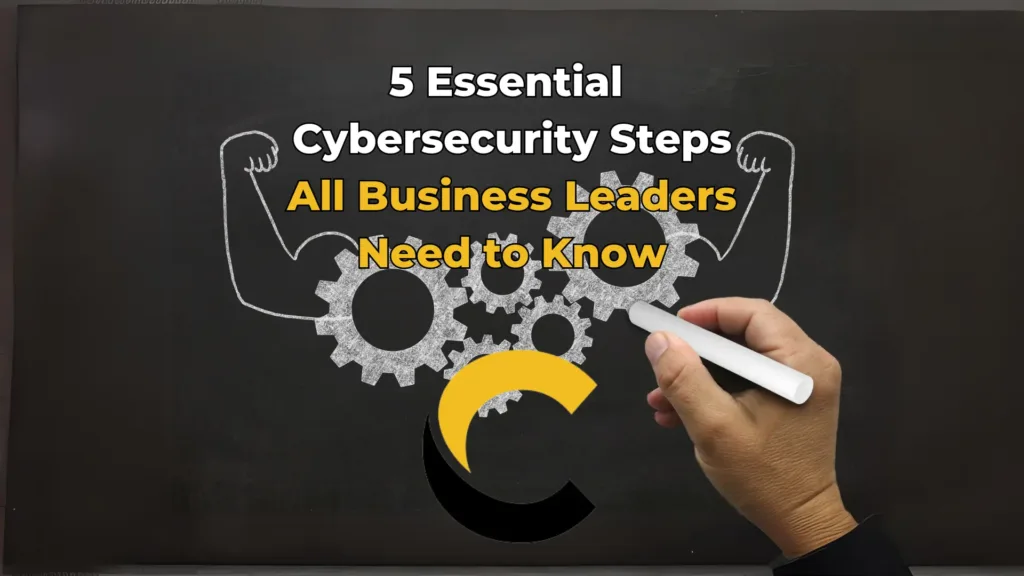
5 Easy Yet Powerful Steps Every Business Leader Must Take for Ultimate Cybersecurity
Do you ever wonder if you’re doing enough to protect your business?
Perhaps, you don’t even know where to start! Many business leaders today feel the pressure of implementing cybersecurity, but quickly learn it’s not as simple as buying a security product and calling it a day.
If you have a small business, you likely won’t be in a position to hire a CTO or CIO to take care of things for you. But don’t worry, in this article you’ll learn 5 easy steps you can take today that meaningfully protect your business, regardless of size.
Multi-Factor Authentication
This simple, yet strong security feature is also known as MFA or 2FA (two-factor authentication). Some apps, like your bank, require MFA to be setup when you first login. However, many other applications allow you to choose whether or not MFA is enabled or enforced. We recommend requiring every employee to use MFA for every application. Where possible, set the app to enforce MFA, so you know every employee is using it.
If you want to learn more about MFA and how it keeps your business safe, read our full break-down here.
Install security updates regularly
With most software now updating weekly and attackers reverse-engineering each patch within days, it’s more important than ever to keep your software and devices up-to-date. Most of the updates we receive are security updates, fixing vulnerabilities that have been discovered. Make sure automatic updates are enabled where possible. For devices that require manual updating, create a list of the devices and check for updates at least monthly. The last thing you want is to suffer a hack that could have been avoided by a simple update!
Backup your data and test the backups regularly
Make sure you have a comprehensive backup strategy in place to keep critical data safe. It’s best to keep two backups of your data at all times, one that is stored locally in your office, and one that is stored off-site. The off-site backup should be located far away from your physical backup. Cloud services are a great way to have a secure off-site backup.
Configure your backup to alert you when a problem occurs. Additionally, we recommend manually checking on your backup at least monthly to make sure things are working as intended. Alerts are great, but sometimes they don’t work quite right. Double checking only costs a little bit of time, but can save you greatly.
Train your employees
Train your employees how to spot phishing emails and other cyber threats. It’s also important to train them what to do when they spot a threat. Your employees can be your greatest risk or your greatest defense, so why not make it the latter? Training every employee on a regular basis keeps their senses sharp, and it is the one defense that improves with practice. Require new hires to complete a formal training program right away. Meanwhile, make sure all other employees complete training at least annually.
Create a Written Incident Response Plan
Those who fail to plan, plan to fail. This couldn’t be truer when it comes to your cybersecurity! Right now, before a disaster strikes, is the best time to create a plan. Your incident response plan should include a few key pieces.
First, specify the person or team responsible for executing the plan. Next, write down any support staff included in carrying out the plan. Make sure to include a way to contact these team members, even if company phones are down. Finally, write out the steps you will take when a disaster strikes. Here are a few examples.
- Investigate the reported event to determine whether or not it is a security incident
- Determine the scope of the incident and notify affected parties
- Perform recovery steps
- Debrief to discuss the incident and adjust the incident response plan as needed
By following these 5 simple steps, you will greatly increase the cybersecurity in your business.
Want to know which of these five is your weakest? The three-minute self-assessment covers all of them, plus four more areas, and gives you a score on screen with no email required. We help our clients with these steps and many more, starting with the Sentry Inspect cybersecurity & I.T. assessment, and you can schedule a Compatibility Consult whenever you are ready to talk.