FAQ
What Is Managed IT? A Practical Overview for Finance and Law Firms

For financial firms and law practices, technology failures are not minor disruptions, they are compliance events. Without proactive IT management, a single outage or security lapse can expose sensitive data, halt client operations, and draw unwanted regulatory attention.
Despite this, many firms still manage IT reactively, addressing problems only after they appear. This approach may work temporarily, but it creates unnecessary risk in compliance-heavy industries.
Managed IT offers an alternative.
Managed IT is a structured way of overseeing and maintaining technology systems throughout the business. Instead of responding to issues as they arise, firms partner with a provider that proactively manages systems, security, and performance.
For regulated industries, this proactive approach is less about convenience and more about control.
To understand how this model works in practice, see Sentry CTO’s overview of Managed IT services.
What Does Managed IT Mean?
Managed IT refers to an ongoing service model where technology systems are actively monitored, maintained, and supported on a continuous basis.
The key distinction is proactive versus reactive support.
Reactive IT typically follows a break-and-fix pattern. When something stops working, support is contacted, and the issue is resolved after downtime has already occurred. While this may seem cost-effective in the short term, it often leads to unpredictable expenses and increased risk.
Managed IT operates differently. Systems are monitored in real time. Updates and patches are applied on a schedule. Potential issues are identified early, before they disrupt operations or compromise security.
For financial and legal firms, this proactive approach is critical because:
- Downtime can delay time-sensitive client work
- Security gaps can expose confidential data
- Compliance failures can result in audits, penalties, or legal exposure
Managed IT is designed to reduce these risks by keeping technology stable, secure, and predictable.
Additional context and related insights can be found in Sentry CTO’s article library.
What Is a Managed IT Service Provider?
A Managed IT Service Provider, often referred to as an MSP, is an external partner responsible for managing some or all of a firm’s technology environment.
Rather than relying solely on internal staff or on-demand support, firms work with an MSP to provide continuous oversight and expertise.
For finance and law firms, an MSP’s role often includes:
- Monitoring systems for performance and security issues
- Managing updates, patches, and routine maintenance
- Supporting data protection and access controls
- Assisting with documentation and audit readiness
- Helping align technology with regulatory requirements
The MSP is not just a support resource. It acts as a strategic partner focused on reducing risk and maintaining stability over time.
More detail on what Managed IT services typically include is available here.
How Much Do Managed IT Services Cost?
Managed IT services are usually priced using predictable models rather than hourly billing.
Common pricing approaches include:
- Per-device pricing, based on the computers and servers actually being managed (the model we use, because devices are what drive the cost)
- Per-user pricing, based on the number of employees
- Flat monthly fees, based on service scope and complexity
For finance and law firms, costs are influenced by factors such as:
- Regulatory and compliance requirements
- Data sensitivity and security expectations
- Complexity of systems and applications
- Reporting and audit support needs
Because pricing models and cost comparisons vary significantly by firm size and risk profile, Sentry CTO already provides a detailed breakdown of Managed IT versus other IT models here.
This article is intended to provide context, not replace that deeper analysis.
How Do I Choose a Managed IT Provider?
Choosing a Managed IT provider requires more than comparing prices. For regulated industries, experience and accountability matter.
When evaluating providers, financial and legal firms should consider:
- Experience working with compliance-heavy industries
- Clear service level agreements that define response and responsibility
- Strong security standards and documented processes
- Transparent communication and reporting practices
- A proactive service philosophy rather than reactive support
A provider that understands regulatory environments can help firms avoid common pitfalls related to audits, data handling, and risk exposure.
Additional guidance on evaluating IT partners is available through Sentry CTO’s resource center.
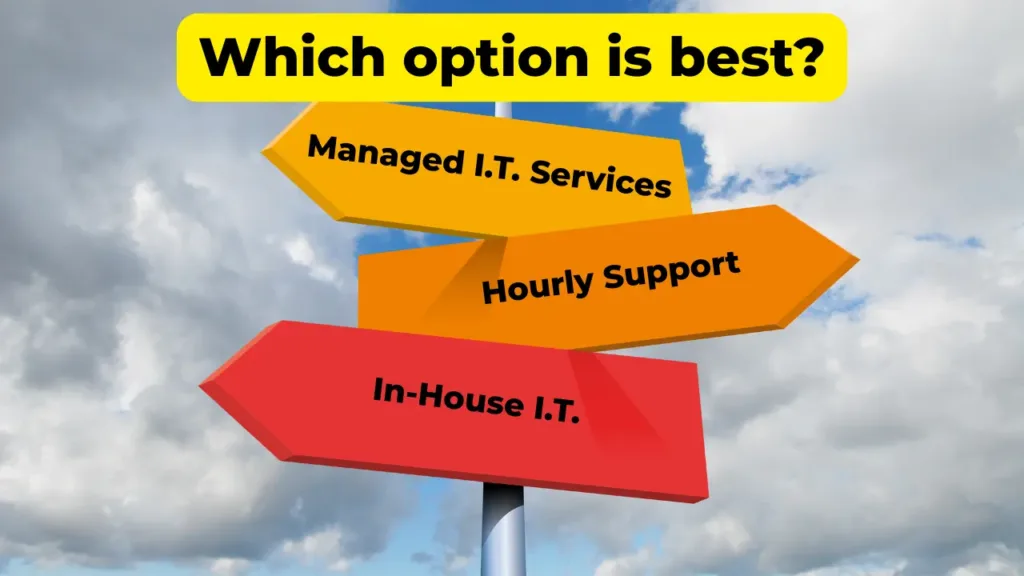
Managed IT vs. In-House IT
A common question is: Is managed IT better than in-house IT?
There is no universal answer. The right model depends on firm size, internal expertise, and regulatory complexity.
At a high level:
- Managed IT offers predictable costs, broad expertise, and easier scalability
- In-house IT provides direct control but can be costly and difficult to scale
Rather than duplicating a detailed comparison here, Sentry CTO provides an in-depth evaluation of managed, in-house, hourly, and hybrid IT models at the link here.
This article focuses on helping firms understand the role Managed IT can play within that broader decision.
Benefits of Managed IT
For finance and law firms, the benefits of Managed IT are largely tied to risk management and operational consistency.
Key advantages include:
- Predictable monthly IT costs
- Continuous system monitoring
- Reduced downtime and faster issue detection
- Support for compliance and audit readiness
- Less strain on internal staff
Instead of reacting to problems, firms gain visibility and stability across their technology environment.
Related discussions and examples can be found here.
Disadvantages of Managed IT
Managed IT is not without tradeoffs, and firms should evaluate them honestly.
Potential disadvantages include:
- Dependence on an external provider
- Less hands-on control over daily IT decisions
- The need for clear communication and defined expectations
For some firms, hybrid models that combine internal staff with managed services may offer a balanced approach. These options are explored in more detail in Sentry CTO’s comparison article.
Which Is Better: Outsourcing or In-House?
For many finance and law firms, the choice is not strictly outsourcing or in-house.
Smaller firms often benefit from fully managed services. Larger firms may retain internal IT while outsourcing security, monitoring, or compliance-related functions.
The best approach depends on risk tolerance, regulatory exposure, and long-term strategy. What matters most is that the model supports stability and compliance rather than creating hidden vulnerabilities.
Conclusion
Managed IT is not just an operational decision. For regulated industries, it is a strategic approach to managing risk, compliance, and business continuity.
By shifting from reactive support to proactive oversight, finance and law firms can reduce downtime, improve security, and gain clearer control over their technology environments.
If you are evaluating whether Managed IT is the right fit for your firm, the next step is understanding where your current setup stands. Our three-minute self-assessment covers nine areas and gives you a score on screen, no email required.
Then, if the results raise questions, a fifteen-minute Compatibility Consult is free and comes with no proposal attached: